
A packed column may look simple: vapor rises, liquid flows down, and packing creates the contact area for separation. But in distillation, small design choices can affect purity, pressure drop, energy use, and stable operation.
The key design considerations for random packed columns include packing material, packing size, column diameter, liquid distribution, pressure drop, and mass transfer efficiency. When these factors work together, random column packing can support efficient separation; when they do not, flooding, poor distribution, and higher operating costs can follow.
This guide focuses on random packed columns for distillation, especially atmospheric, low-pressure, and vacuum applications where packing performance matters.
Key Takeaways
- Random packed columns perform best when packing material, column diameter, liquid distribution, pressure drop, and operating conditions are designed as one system.
- In distillation, efficient vapor-liquid contact supports stronger separation, lower pressure drop, and more stable column performance.
- Choosing the right random packing and internals helps prevent flooding, poor distribution, and avoidable performance losses.
What Is a Random Packed Column?
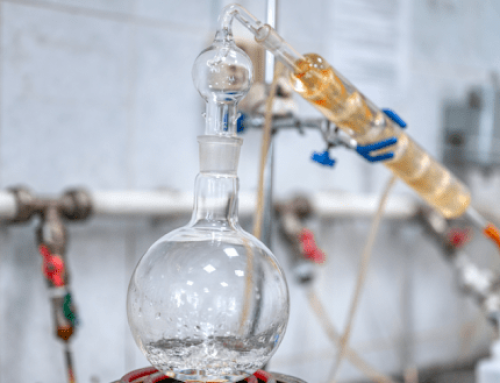
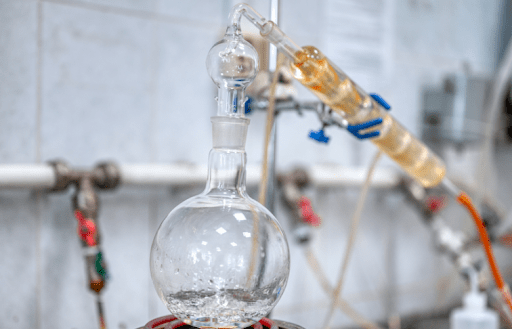
A random packed column is a distillation column filled with individual packing pieces that create surface area for vapor-liquid contact. The packing is “random” because the pieces are loaded into the column without a fixed orientation.
How a packed column works
A packed column typically operates with the liquid phase flowing downward over the packing surface while the vapor or gas phase rises through the open spaces in the packed bed. This countercurrent movement allows the gas and liquid phases to contact each other continuously.
In distillation, that contact drives mass transfer. Lighter components move toward the vapor phase, while heavier components remain more concentrated in the liquid phase. The better the contact, the better the potential separation.
A packed column involves more than packing material. It also depends on key components such as liquid distributors, packing supports, hold-down devices, column internals, and vapor inlet design.
What makes random packing different
Random packing is made of individual pieces that settle by gravity into place inside the column. This differs from structured packing, which uses arranged layers or sheets to create more defined flow paths.
Both random and structured packing can support high separation efficiency, but they behave differently. Structured packing is often selected when extremely low pressure drop is the main priority. Random packing is often preferred when the design needs a practical balance of cost, efficiency, installation flexibility, capacity, and serviceability.
Why Random Packing Is Used in Distillation
Random packing is useful in distillation because it can provide strong contact between vapor and liquid while keeping the equipment compact and practical to operate.
Lower pressure drop
One of the biggest advantages of packed columns over many plate columns or tray columns is the potential for lower pressure drop. This matters in vacuum and low-pressure distillation because pressure drop can affect boiling temperature, product quality, and energy use.
Lower pressure drop can also help with reducing energy consumption, especially when the process involves heat-sensitive materials or high-purity separations.
Strong separation efficiency
A well-designed packed bed column can support strong separation efficiency by creating a large wetted surface for vapor-liquid contact. The packing surface, liquid flow, vapor rate, and column dimensions all influence how effectively mass transfer happens inside the column.
In practical terms, the goal is not just to pack the column tightly. The goal is to create usable surface area while maintaining enough open void space for vapor and liquid to move without flooding or excessive pressure drop.
Compact column design
Random packing can be especially useful in smaller diameter columns, including lab, pilot, and technical-scale equipment. In smaller columns, trays can be difficult to install or may not provide the desired efficiency in the available footprint.
A packed bed can often deliver strong performance in a more compact space, provided the column diameter, packing height, and liquid distribution are designed correctly.
Start With the Distillation Goal
Good packed column designing starts with the separation target, not the packing catalog. Before choosing a packing material or packing size, the process goal needs to be clear.
Define the separation requirement
The first question is simple: what separation does the column need to achieve?
That may involve high purity, tight boiling range separation, solvent recovery, crude oil assay work, specialty chemical separation, or vacuum distillation of heat-sensitive materials. Each goal affects the required number of separation stages, packing height, reflux ratio, operating pressure, and allowable pressure drop.
Review the operating conditions
A packed column requires careful review of temperature, pressure, vapor and liquid loading, fluid properties, fouling risk, and compatibility with the process materials.
These operating conditions directly affect performance. A column designed for one vapor rate or pressure range may not perform the same way if the feed changes, the reflux ratio shifts, or the system operates closer to flooding than intended.
Set the main design priority
Not every distillation column has the same priority. One system may need the highest possible purity. Another may need the lowest practical pressure drop. Another may prioritize compact column dimensions or easier maintenance.
Knowing the priority early makes the rest of the design more focused.
Design for Efficient Mass Transfer
The purpose of random packing in distillation is to support efficient mass transfer between vapor and liquid. Packing selection matters, but packing alone does not guarantee performance.
Why mass transfer efficiency matters
Mass transfer efficiency depends on contact area, liquid wetting, vapor flow, residence time, and the mass transfer coefficient. The packing surface helps spread liquid into a thin film while vapor moves through open spaces in the bed.
More surface area can help, but only if that surface is actually wetted and available for contact. Dry spots, channeling, and uneven liquid flow reduce active area and weaken mass transfer performance.
How HETP relates to column performance
In packed distillation columns, performance is often discussed using HETP, or height equivalent to a theoretical plate. HETP helps connect packed bed performance to staged separation concepts.
A lower HETP generally means less packing height is needed to achieve a given separation. However, real-world HETP depends on more than the packing itself. Liquid distribution, vapor loading, column diameter, operating pressure, and installation quality all matter.
Why packing surface is only part of the story
It is tempting to choose random packing based only on surface area. That can backfire. A packing with a very high surface area may also create a higher pressure drop or be more sensitive to fouling.
The better approach is to balance surface area, void space, wetting behavior, pressure drop, capacity, and service conditions.
Prioritize Liquid Distribution
Liquid distribution is one of the most important design factors in any random packed column. Even excellent packing cannot perform well if the liquid does not reach the bed evenly.
Why poor liquid distribution hurts performance
Poor liquid distribution creates dry zones, channeling, wall flow, and overloaded areas. These issues reduce the active packing area and lower the separation efficiency.
In distillation, maldistribution can also make the column harder to control. Product quality may drift, pressure drop may change, and the apparent efficiency of the packed bed may fall below expectations.
How liquid distributors support performance
Liquid distributors spread liquid evenly across the top of the packed bed. Their design should match the column diameter, liquid rate, service conditions, and required distribution quality.
For small columns, liquid distribution may look simple, but it is still critical. In larger or taller columns, the distributor design becomes even more important because small distribution problems can become larger performance losses over the full packing height.
When redistributors may be needed
As liquid flows down a packed bed, it can migrate toward the wall. In taller beds, redistributors may be used to restore uniform liquid distribution and protect efficiency.
The goal is to keep the entire packed bed active, not just the sections that happen to receive the most liquid.
Choose the Right Packing Material and Size
The right packing selection balances efficiency, pressure drop, durability, and compatibility. No single packing material or size is best for every distillation column.
Compare common packing materials
Common packing materials include metal, plastic, and ceramic packing. For many distillation applications, metal packing is common because it offers strength, temperature resistance, and durability.
Material selection should account for operating temperature, process chemistry, cleaning methods, and mechanical requirements. In demanding distillation service, chemical compatibility matters because corrosion or material degradation can affect performance and service life.
Balance packing size with pressure drop
A smaller packing size usually provides more surface area per unit volume, which can improve efficiency potential. The tradeoff is often increased pressure drop and a higher risk of plugging in dirty or fouling services.
Larger packing usually offers more open area, which can support lower pressure drop and better capacity. The tradeoff is often lower efficiency or higher HETP per unit of packing height.
The right choice depends on the required separation, column diameter, vapor and liquid loading, pressure drop allowance, and maintenance expectations.
Consider long-term serviceability
Packing should be selected with cleaning, inspection, and replacement in mind. If the column is difficult to access or the process is prone to fouling, serviceability becomes a design factor, not just a maintenance detail.
Packing replacement may be needed when packing becomes fouled, damaged, corroded, or unable to support the required separation efficiency.
Size the Column Diameter and Packing Height
Column dimensions control capacity, pressure drop, and separation performance. If the sizing is off, even high-quality random packing may not perform as expected.
Size the column diameter for capacity
The column diameter determines the cross-sectional area available for vapor and liquid movement. If the column is too small, vapor velocity may be too high, leading to flooding, entrainment, and excessive pressure drop.
If the column is too large, liquid distribution can become difficult at low flow rates. The design should account for normal, minimum, and maximum expected fluid flow rates.
Maintain hydraulic margin
A packed column should not operate too close to flooding under normal conditions. Adequate hydraulic margin helps maintain stable operation when feed composition, reflux rate, pressure, or temperature changes.
This margin is especially important in vacuum and low-pressure systems, where pressure drop can have a larger effect on separation behavior.
Estimate the required packing height
Packing height determines how much vapor-liquid contact the column provides. Too little height may not achieve the desired separation. Too much height can add cost, pressure drop, and distribution challenges.
Designers may estimate required height using HETP or transfer units, depending on the available data and the type of separation. The important point is that the packing height should support the separation target without creating unnecessary hydraulic problems.
Control Pressure Drop
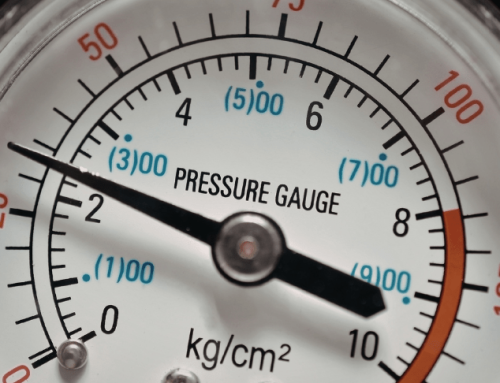
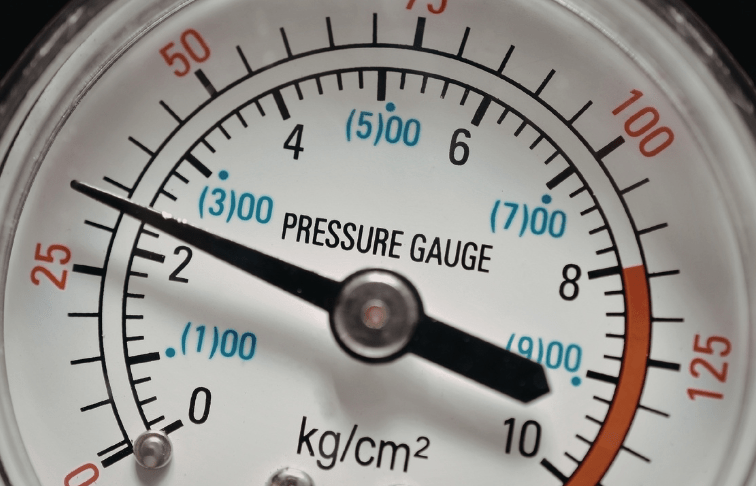
Pressure drop affects energy use, column capacity, and distillation performance. It should be managed throughout the design process.
Why pressure drop matters in distillation
In distillation, pressure influences boiling temperature and vapor-liquid equilibrium. A high pressure drop can change the pressure profile across the column, which may affect product quality and energy consumption.
For vacuum distillation, pressure drop is even more important because the system depends on maintaining reduced pressure to lower boiling temperatures.
What causes pressure drop problems
Pressure drop can increase because of small packing size, excessive vapor rate, high liquid load, fouling, damaged packing, plugged internals, or operation near flooding.
A rising pressure drop during operation is a signal worth investigating. It may point to fouling, liquid maldistribution, or a shift in process conditions.
Balance pressure drop and efficiency
The best design is not always the one with the lowest possible pressure drop. The design needs enough vapor-liquid contact to meet separation goals while keeping pressure drop within an acceptable range.
That balance is where packing characteristics, column diameter, and internals all come together.
Plan the Column Internals
A packed distillation column is a system. The internals guide vapor and liquid, support the packing, and help protect stable operation.
Liquid distributor and redistributor
The liquid distributor promotes even wetting at the top of the packed bed. Redistributors may be used in taller beds to restore liquid coverage and reduce wall flow.
Packing support and hold-down device
The packing support carries the wet packing weight while allowing vapor and liquid to pass through with minimal restriction. A hold-down device helps prevent packing movement during high vapor rates or process upsets.
Vapor inlet and mist control
The vapor inlet should help incoming vapor spread evenly across the column cross-section. Poor vapor entry can create localized velocity problems and reduce effective contact.
A demister or mist eliminator may be used where carryover is a concern. It captures moisture droplets or liquid mist before vapor leaves the column.
Account for Flow Behavior and Temperature
Fluid behavior inside the packed bed determines whether the column runs smoothly or becomes unstable. Temperature also affects both separation and equipment reliability.
Watch the fluid dynamics
Fluid dynamics influence wetting, pressure drop, residence time, entrainment, and flooding. Vapor density, liquid viscosity, surface tension, and flow rates all matter.
Flooding occurs when vapor flow restricts downward liquid movement. Entrainment occurs when vapor carries liquid upward. Both can reduce separation efficiency and disrupt column operation.
Consider temperature effects
Temperature affects vapor pressure, viscosity, density, and material compatibility. In distillation, temperature profiles help drive separation. In vacuum distillation, lower pressure can reduce boiling temperatures, which is useful for heat-sensitive materials.
Use modeling when it adds value
Computational fluid dynamics can help evaluate flow distribution, vapor inlet behavior, and potential problem areas in complex designs. It is most useful when paired with practical process knowledge, reliable data, and engineering judgment.
Design for Maintenance and Long-Term Operation
A good design should perform across real operating conditions, not just one ideal design point.
Plan for real operating conditions
Feed rates change. Reflux ratios shift. Temperatures move. Fouling may develop. Cleaning cycles vary. A strong design accounts for these changes early.
Operating too close to flooding leaves little room for normal process variation. A small increase in vapor or liquid load can trigger pressure drop spikes, entrainment, or reduced separation efficiency.
Make cleaning and inspection practical
Columns should be designed so teams can inspect distributors, supports, hold-downs, and packing when needed. Better access can reduce downtime and make maintenance safer.
If fouling is possible, packing size, packing material, and cleaning strategy should reflect that risk.
Troubleshoot the whole system
If performance drops, the packing is not always the problem. Liquid distributors, supports, vapor inlet design, fouling, feed changes, and operating conditions can all contribute.
Replacing packing without checking the surrounding internals may leave the real issue untouched.
Common Design Mistakes to Avoid
Most packed column problems come from design mismatches rather than one obvious failure. These are the issues worth watching.
- Choosing packing based only on surface area. Surface area matters, but pressure drop, wettability, capacity, and compatibility matter too.
- Ignoring liquid distribution. Poor distribution can weaken performance even when the packing itself is well-suited to the service.
- Running too close to flooding. A narrow hydraulic margin makes the column sensitive to routine changes in vapor or liquid load.
- Undersizing or oversizing the column diameter. A small diameter can increase vapor velocity, pressure drop, flooding risk, and entrainment. An oversized column may struggle with liquid distribution at low rates.
- Replacing packing without checking the internals. Distributors, supports, hold-downs, and vapor inlets may be the real source of poor performance.
Distillation Packing and Column Solutions From PDS
When column performance depends on the details, Performance Distillation Solutions helps you choose the right path forward. We support distillation work with random column packing, column internals, LabTech Instruments, and turnkey thermal process systems for lab, pilot, and technical-scale needs.
Our product lineup includes Pro-Pak®, Metal IMTP Rings, Metal Pall Rings, and Plastic Pall Rings, Interdistributor and Holddown Column Internals, along with support for ASTM methods, custom systems, extractors, evaporators, and general distillation applications.
Call Performance Distillation Solutions to discuss your column, packing, testing, or system needs.
Conclusion
Random packed columns perform best when they are designed as complete distillation systems. Packing material, packing size, column diameter, liquid distribution, pressure drop, mass transfer efficiency, packing height, fluid dynamics, and maintenance all need to work together.
When the design is balanced, a packed bed column can support strong separation efficiency, lower pressure drop, reduced operating costs, and stable operation. Random packing may settle randomly, but the design approach should be anything but random.
Frequently Asked Questions
What is a random packed column used for?
A random packed column creates vapor-liquid contact inside a packed tower. In distillation, that contact supports separation. Packed columns are also used in chemical engineering applications such as gas absorption, liquid-liquid extraction, gas scrubbing, heat transfer, and heat exchange.
Why is liquid distribution important?
Liquid distribution controls how evenly liquid reaches the packing surface. Poor coverage can create dry spots, overloaded areas, lower mass transfer rates, and weaker separation performance.
How does pressure drop affect performance?
Pressure drop affects capacity, energy use, and column stability. In vacuum or low-pressure distillation, the required pressure drop is especially important because it can influence boiling behavior and separation results.