
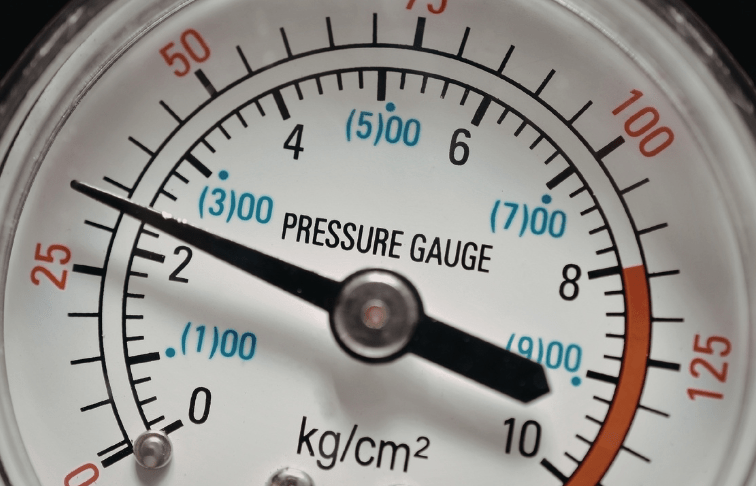
Pressure drop can quietly make or break a packed column. Even with the right chemistry, packing height, and separation target, high column pressure drop can limit capacity, raise energy consumption, and make operation less stable.
This blog about pressure drop in random packing columns and what engineers need to know, matters for anyone designing or troubleshooting a random packing column. Pressure drop shows how easily gas moves through the packed bed, how close the column is to flooding, and whether the system can support efficient mass transfer.
Random packing is used in distillation, absorption, gas scrubbing, liquid-liquid extraction, stripping, water purification, and other separation processes. In each application, the goal is the same: create reliable gas-liquid contact while keeping flow stable and pressure drop practical.
Key Takeaways
- Pressure drop affects throughput, energy consumption, separation efficiency, and control.
- Random packing selection should balance surface area, open space, pressure drop, corrosion resistance, and cost.
- Liquid distribution, column diameter, flow rates, packing size, and packing material all influence column pressure drop.
What Is Pressure Drop in a Random Packed Column?
Pressure drop is the loss of pressure as gas or vapor moves through the packed bed. In random packed columns, gas flows through open spaces between packing elements while the liquid phase moves downward across the packing surface.
Some resistance is expected. It helps create gas and liquid contact, but too much column pressure drop can limit capacity, increase operating costs, and push the column toward flooding.
Engineers usually measure pressure drop across the packed bed, but internals matter too. Liquid distributors, supports, hold-down devices, demisters, and other components can all add resistance.
How Random Packing Creates Flow Resistance
Random packing involves loose packing elements, such as Raschig rings, pall rings, IMTP packing, saddles, and other packing types, that settle into irregular flow paths. This design supports mixing and surface contact while leaving space for gas and liquid to move.
Structured packing uses ordered packing layers or corrugated sheets. Random packing is less uniform, so pressure drop depends heavily on open area, packing size, liquid loading, and how evenly the bed is wetted.
Two pressure drop values are useful:
- Dry pressure drop measures gas flow through packing without liquid.
- Irrigated pressure drop measures gas flow while liquid is flowing through the bed.
Irrigated pressure drop is usually more practical because it reflects real operating conditions.
Why Pressure Drop Matters in Chemical Engineering
In chemical engineering, pressure drop directly affects performance. High pressure drop can reduce throughput, increase blower or compressor demand, raise reboiler duty, and shrink the operating window.
In a distillation column, excess pressure drop can affect vapor flow, temperature profile, and vacuum performance. In gas scrubbing or absorption towers, it can increase fan energy and operating costs, especially with large volumes of incoming gas.
Lower pressure drop can improve capacity and reduce energy consumption, but it should not come at the expense of efficient mass transfer. The best design delivers the required separation with stable flow and practical energy use.
Key Factors That Affect Pressure Drop
Pressure drop is shaped by the way gas, liquid, packing, and column geometry work together. A small change in one area can affect capacity, efficiency, and operating stability across the whole column.
Gas and liquid flow rates
Gas flow rate is often the biggest driver. As gas velocity rises, resistance through the packed bed increases. If the gas rate climbs too high, the column can approach loading or flooding.
Liquid flow matters too. Higher liquid rates increase liquid holdup, leaving less open space for gas to pass through. Foaming, viscosity, density, and surface tension can make the pressure drop rise even faster.
Packing size and shape
Packing size affects both pressure drop and efficiency. Smaller packing can provide more surface area, but it often creates a higher pressure drop. Larger packing usually offers more open space and lower pressure drop, but may require more packing height to meet the separation target.
Shape matters as well. Raschig rings, pall rings, saddles, and modern high-efficiency packing designs all create different flow paths. Engineers should compare surface area, void fraction, strength, packing height, pressure drop, and HETP when selecting packing for distillation.
Packing material
Packing material affects durability, wetting, corrosion resistance, temperature limits, and cost. Metal is often used for strength and high-temperature service. Plastic materials can be cost-effective in compatible lower-temperature processes. Ceramic or specialty materials may fit corrosive applications.
Material choice also affects long-term pressure drop. Corrosion, breakage, and fouling can reduce open area and restrict flow.
Column diameter
Column diameter controls the cross-sectional area available for flow. For the same gas rate, smaller-diameter columns create higher gas velocity and higher pressure drop. Larger columns can reduce velocity, but they need careful liquid distribution to avoid maldistribution.
Engineers often use vendor data, hydraulic calculations, and generalized pressure drop correlation methods to evaluate diameter, flow rates, and operating margin.
Liquid distribution
Liquid distribution strongly affects pressure drop and separation efficiency. Even liquid distribution helps the liquid spread across the bed instead of concentrating in one area.
Poor liquid distribution can overload part of the packing, create local flooding, reduce active surface area, and increase pressure drop. Liquid distributors should spread the liquid evenly without restricting gas flow. In larger columns, redistributors may be needed to keep the flow stable.
Lower Pressure Drop vs. Higher Pressure Drop
Lower pressure drop can reduce energy consumption, improve capacity, and support low-pressure or vacuum operation. That is especially valuable in high-efficiency applications where pressure losses can affect product quality or operating cost.
Higher pressure drop is not always bad, but it is a warning sign when it rises beyond the expected range. It may indicate fouling, excessive flow rates, liquid holdup, poor distribution, damaged packing, or flooding.
The practical goal is balanced pressure drop. The column should let gas and liquid move freely enough for stable operation while still creating enough surface contact for mass transfer.
How Pressure Drop Affects Mass Transfer Efficiency
Mass transfer efficiency depends on contact between gas and liquid phases. Random packing provides the surface area and flow paths needed for that contact, but hydraulics determine how effectively that area is used.
If the packing is too restrictive, the pressure drop rises, and capacity falls. If the packing is too open, the column may have a lower pressure drop but not enough surface area for the required separation.
Efficient mass transfer requires both hydraulic capacity and active contact area. In distillation, this may be evaluated using HETP, or height equivalent to a theoretical plate. In absorption processes, engineers may use transfer unit methods. In either case, pressure drop must be considered alongside separation efficiency.
Pressure Drop in Distillation Columns
In a distillation column, pressure drop can influence vapor flow, reboiler demand, condenser performance, and control stability. In low-pressure or vacuum service, even modest pressure losses can affect the pressure profile through the column.
For these applications, packing needs to provide high efficiency without excessive resistance.
Pressure Drop in Absorption and Gas Scrubbing
In absorption towers and gas scrubbing systems, pressure drop often affects fan or blower requirements. Because these systems may handle large gas volumes, small increases in resistance can raise operating costs.
The incoming gas must contact the liquid effectively for contaminant removal or absorption. Too much pressure drop wastes energy. Too little contact reduces process performance.
For these systems, engineers should evaluate packing size, liquid rate, gas rate, corrosion resistance, fouling risk, and liquid distribution before selecting packing.
Random Packing vs. Structured Packing
Structured and random packing both support mass transfer, but they behave differently.
Structured packing uses ordered layers, often made from corrugated sheets. It can offer predictable flow paths and low pressure drop in many applications.
Random packing is loose-filled, flexible, and often cost-effective. It works well in many distillation, absorption, stripping, scrubbing, and industrial processes when properly matched to the service.
The right choice depends on pressure drop limits, separation target, fluid properties, column diameter, fouling risk, installation needs, and operating range. The best comparison is application-specific, not based on broad assumptions.
How Engineers Estimate Pressure Drop
Engineers estimate pressure drop using vendor data, hydraulic calculations, operating history, and generalized pressure drop correlation tools.
A generalized pressure-drop correlation helps connect gas rate, liquid rate, packing properties, fluid properties, and column diameter. These tools are helpful, but they must be used within their appropriate range.
Foaming systems, corrosive fluids, high-temperature service, fouling applications, vacuum operation, and tight purity targets often need closer review. Pressure drop calculations should always be checked against real process requirements and practical operating margin.
Common Signs Pressure Drop Is Too High
A packed column with excessive pressure drop may show:
- Rising differential pressure across the packed bed
- Reduced throughput
- Lower separation efficiency
- Higher energy consumption
- Unstable temperature or pressure profiles
- Increased blower, compressor, or vacuum system load
- Liquid backup, entrainment, or flooding behavior
If pressure drop rises slowly, fouling or solids buildup may be involved. If it rises suddenly, the cause may be flooding, foaming, damaged internals, packing movement, or a process change.
How to Reduce Pressure Drop Without Losing Efficiency
Reducing pressure drop starts with finding the cause. Changing the packing may help, but it is not always the first or best fix.
Engineers should review flow rates, pressure, temperature, feed composition, liquid distribution, packing condition, and internals. Fouled packing may need cleaning or replacement. Damaged packing may need removal. Undersized internals may need redesign.
To reduce pressure drop while protecting efficiency, select packing with the right balance of open area and surface area. Match packing size to column diameter and hydraulic load. Use liquid distributors that promote even liquid distribution without blocking gas flow. Keep the bed clean and avoid operating too close to flooding.
What Engineers Should Ask Before Selecting Random Packing
Before selecting random packing, engineers should define the full operating case. Important questions include:
- What is the allowable pressure drop?
- What separation efficiency is required?
- What are the gas and liquid flow rates?
- What is the column diameter?
- How much packing height is available?
- Is the process distillation, absorption, stripping, gas scrubbing, or liquid-liquid extraction?
- Are corrosion resistance, high-temperature performance, or chemical compatibility concerns?
- Is fouling, foaming, or solids buildup likely?
- Is the column operating at atmospheric pressure, vacuum, or low pressure?
- How important are energy consumption and operating costs?
These answers help engineers select materials, compare packing types, and avoid pressure drop surprises later.
Full-System Support for Random Packing and Pressure Drop
At Performance Distillation Solutions, we take a full-system approach to packed column performance. Pressure drop depends on more than packing alone, so we consider the packing, internals, materials, liquid and gas flow, and operating conditions together.
Our offerings include Pro-Pak® high-performance random packing, standard random packing options, and column internals such as liquid distributors and supports. Through ILUDEST®, we also provide custom turnkey distillation systems for laboratory, pilot, and production-scale applications.
Need help with packing selection, pressure drop concerns, column internals, or a custom distillation system? Call Performance Distillation Solutions to speak with our team.
Conclusion
Pressure drop shows how well gas and liquid are moving through the packed bed.
In random packed columns, reliable performance depends on balancing pressure drop, mass transfer, liquid distribution, packing material, column diameter, and operating costs. Lower pressure drop can improve capacity and reduce energy use, but efficient separation still needs enough contact area.
The best design gives gas and liquid room to move, surface to interact, and margin to operate reliably.
Frequently Asked Questions
What factors affect the pressure drop along the column?
Several factors affect pressure drop, including gas and liquid flow rates, packing size, packing material, liquid distribution, column diameter, fluid properties, and fouling risk. Key characteristics of the packing also matter, especially open space, surface area, and resistance to flow.
How to calculate pressure drop in a packed column?
Pressure drop is usually estimated with vendor data, hydraulic calculations, or a generalized pressure-drop correlation. These methods factor in flow rates, fluid properties, packing type, column diameter, and whether the bed is dry or irrigated.
What is the pressure drop in a column?
Pressure drop is the pressure lost as gas or vapor moves through the packed bed and column internals. Some resistance is normal because packing helps create liquid and gas contact. The goal is a balanced flow that supports stable operation and efficient separation.